All areasCandelo
Candelo and the Ricetto
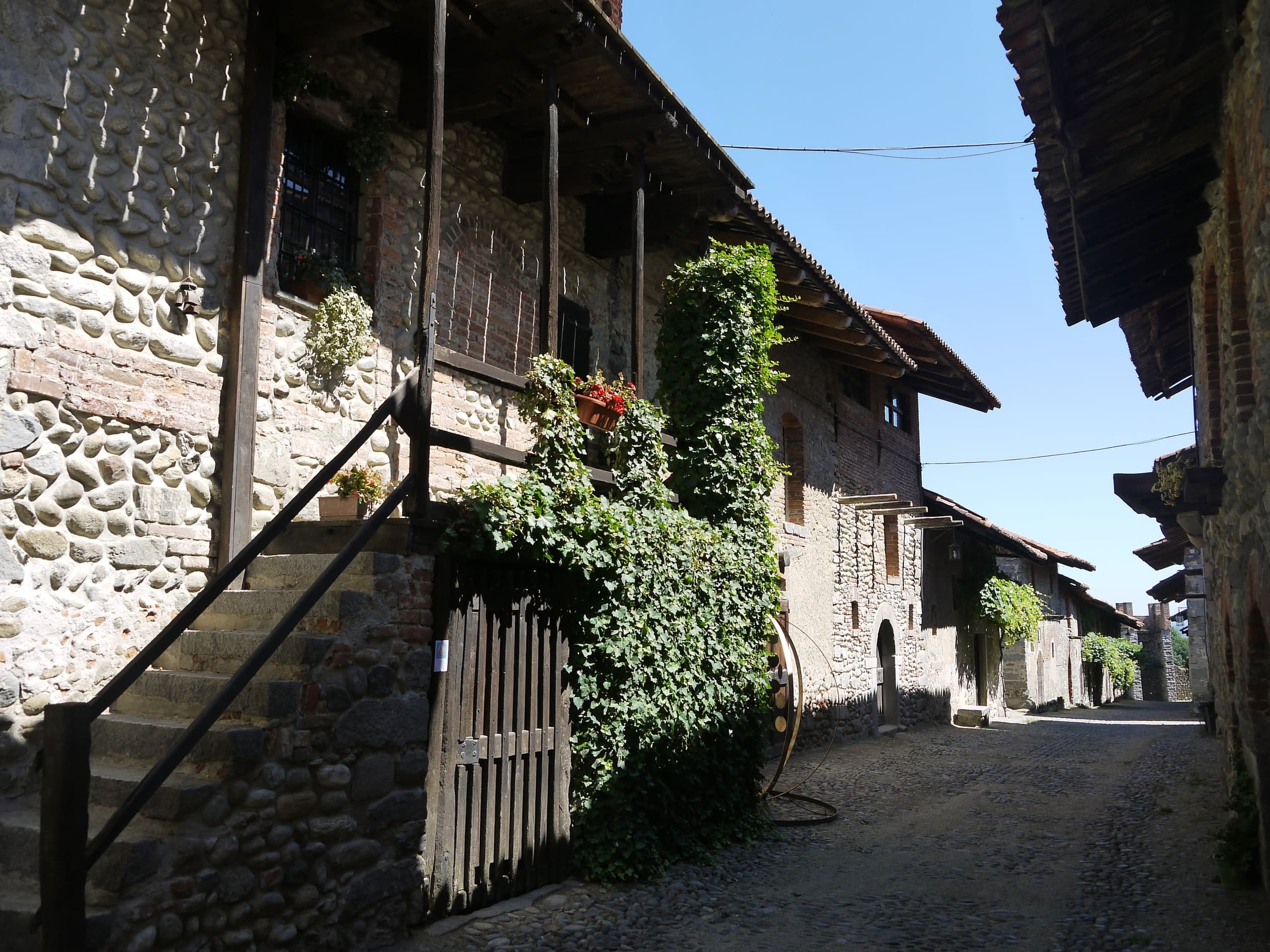
Two hundred small buildings inside medieval walls, where the village kept its wine and grain safe.
The medieval Ricetto of Candelo. · Photo: Marco Coïsson · CC BY-SA 3.0 · Wikimedia Commons


Chapter 1 of 3
The village storehouse
Candelo first appears in a document of 988, and in 1374 it is the first community in the Biella area to give itself to the Savoy. Its Ricetto, built between the late 13th and early 14th century on land granted by the Vialardi di Villanova, was not a place to live: it was a fortified store for wine and grain, which could offer refuge in times of danger. It has a five-sided plan, about 470 metres of almost intact walls, round towers at the corners and a single gate tower.
Chapter 2 of 3
Caneva and solarium
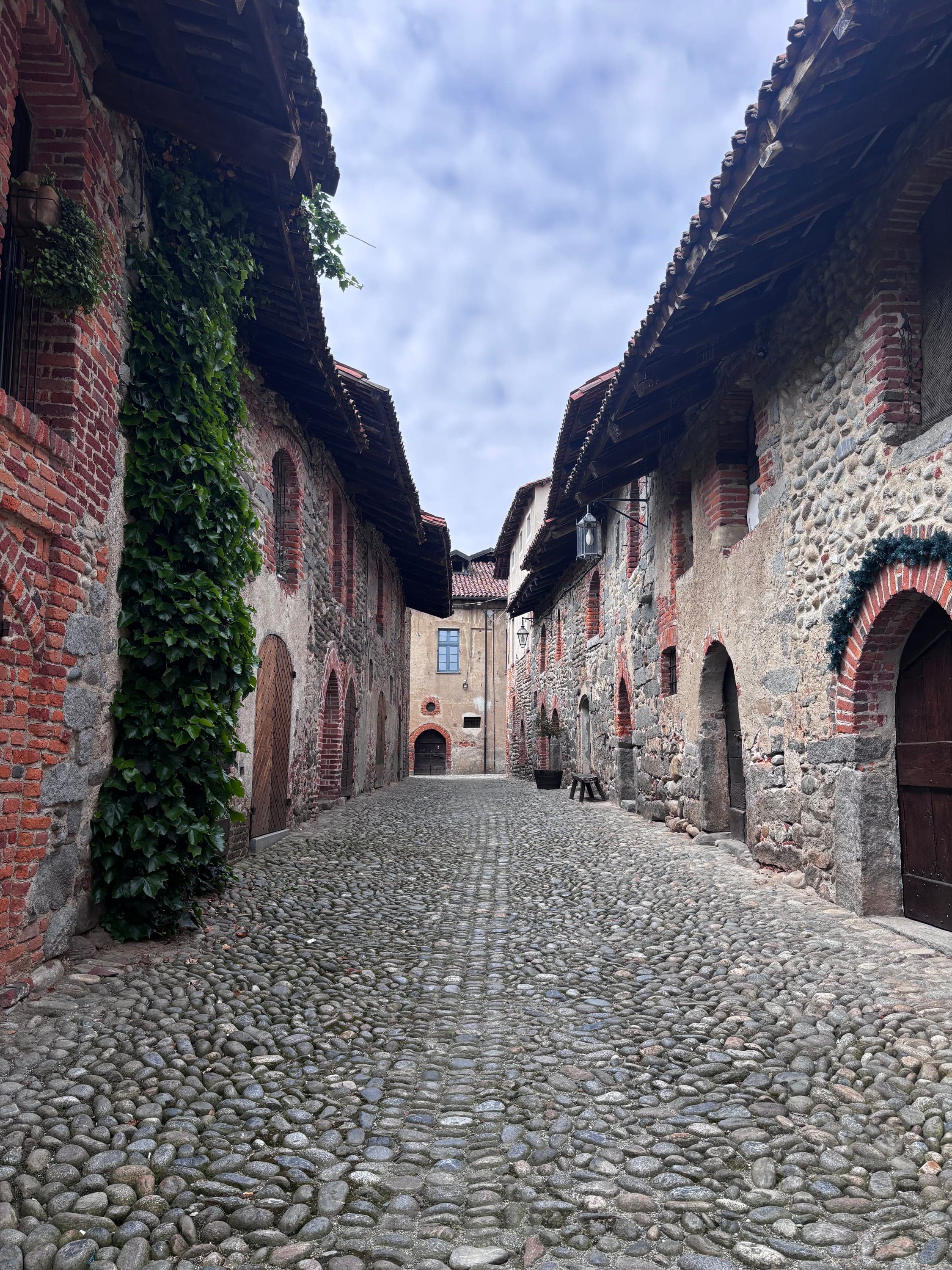
Inside, along five «rue», stand about two hundred buildings that are called cellule here. The ground-floor caneva mainly held wine; the solarium above took the farm produce and served as a storeroom. The two levels did not connect inside: people reached the upper one by external wooden stairs and structures, and the spaces between the buildings also carried away rainwater.
Chapter 3 of 3
A defence shared by all, cellars belonging to each
It is significant that almost all the cellule are privately owned: a defence built together protected resources that belonged to individuals. In 1499 the arbitrators ruled in favour of the people of Candelo in their dispute with Sebastiano Ferrero over the claims on the Ricetto and the hearth tax. The town has about 7,200 inhabitants, at 340 metres, and slopes down towards the Baraggia.
The market
The market in figures
| Where | Minimum–maximum (€/m²) | Minimum–maximum (€/m²) |
|---|---|---|
| Candelocentro storico · OMI B1 | 440–630 | |
| Candeloperiferia · OMI D2 | 570–830 |
Sources
The homes
No homes available here
We have no properties published in this area at the moment.
See all homes