All areasBiella · the upper town
Il Piazzo
A village born of an invitation: in 1160 the bishop promised three privileges to anyone who came to live up here.
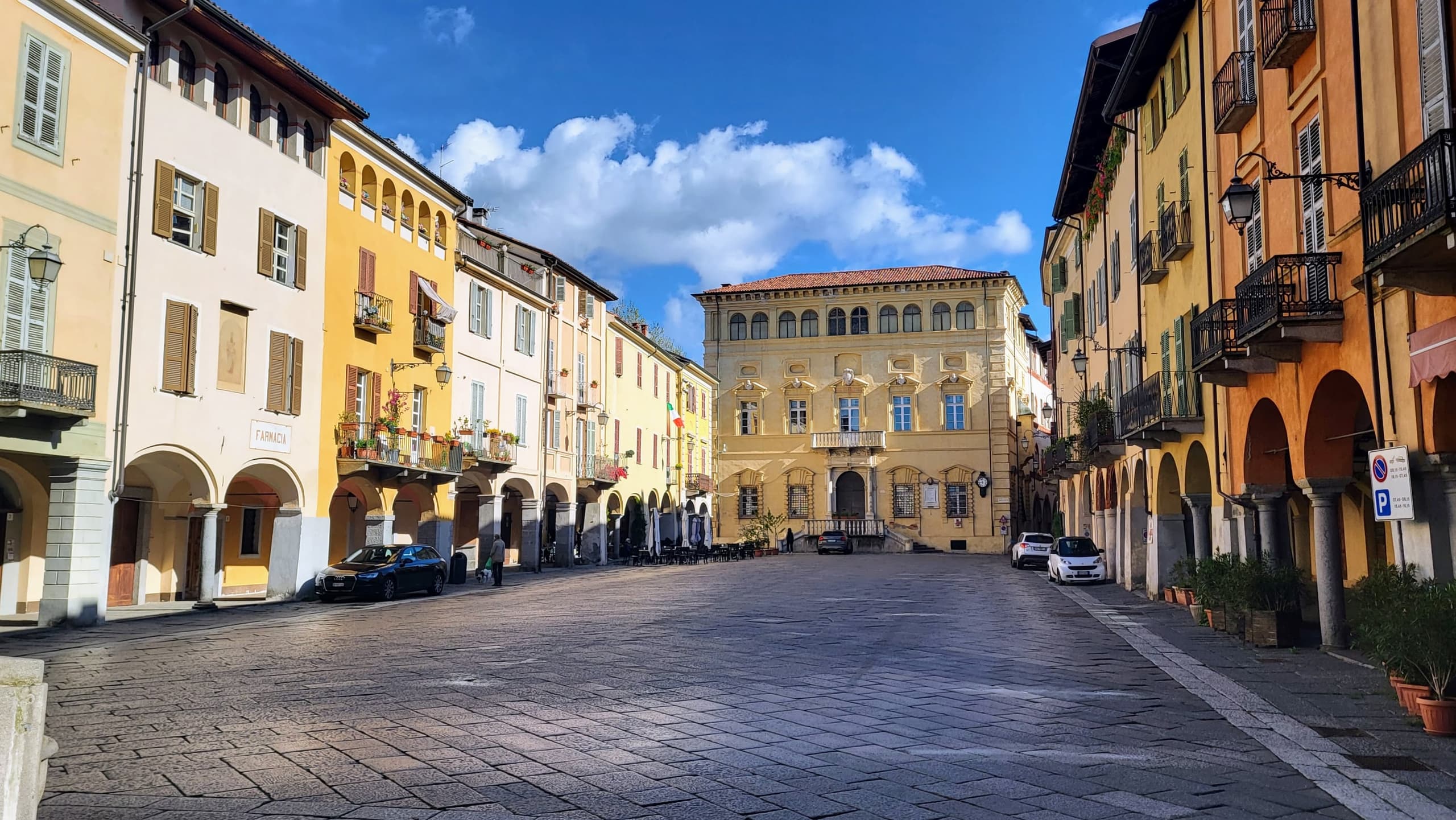
Piazza della Cisterna at the Piazzo, with the arcades and the palace. · Photo: Michael Musto · CC BY-SA 4.0 · Wikimedia Commons

Chapter 1 of 5
An invitation on the spur
In 1160 Uguccione, Bishop of Vercelli, granted those who climbed the spur above the town three things that mattered: justice administered on the spot, the right to slaughter livestock, and a weekly market. This is how the Piazzo began, at about 480 metres, looking down on the Biella of the plain, and it became a village of trade and administration. Two centuries later, in 1377, a revolt destroyed the bishop's castle; two years after that the town placed itself under the Savoy.


Chapter 2 of 5
Red brick
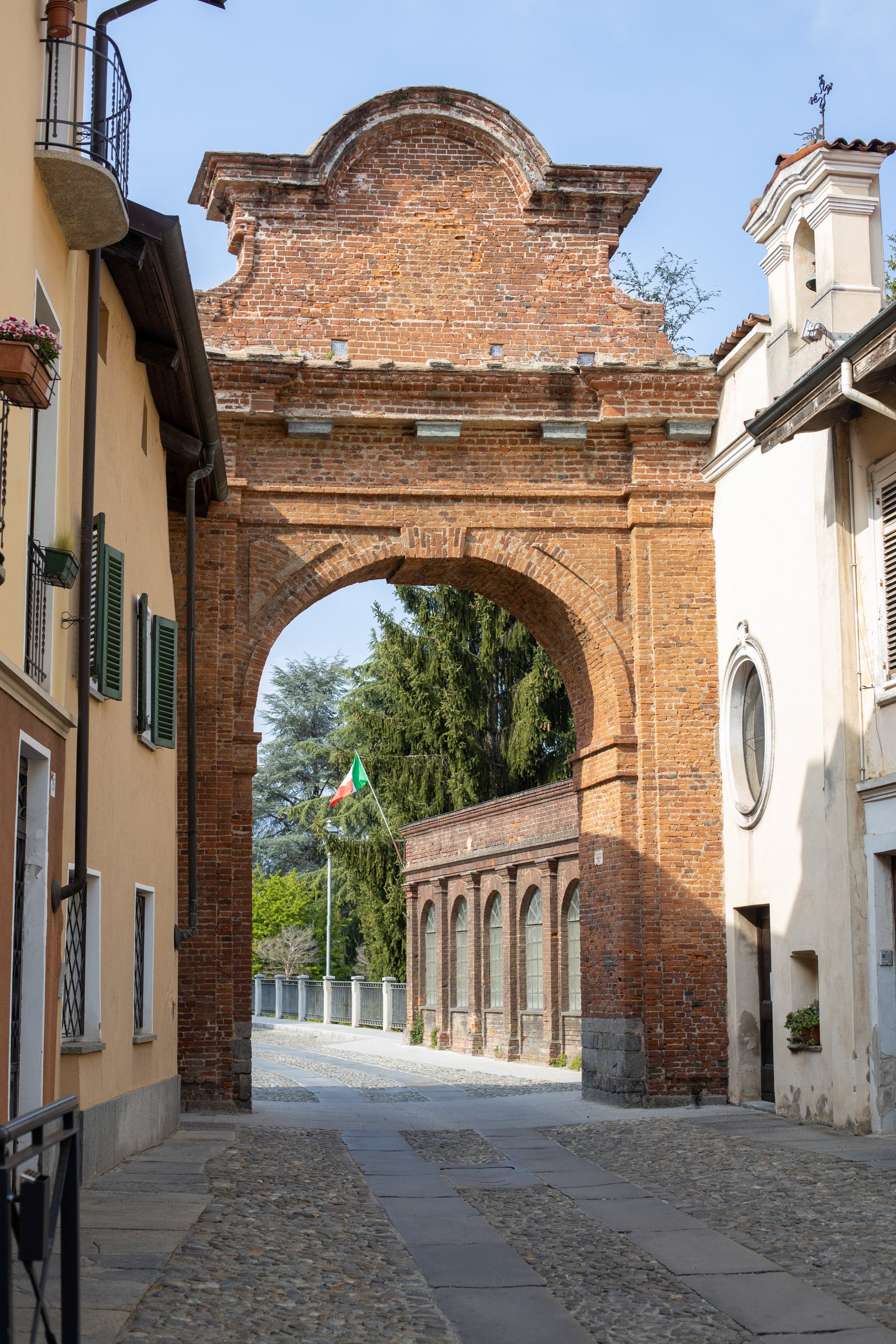
What remains can be read on foot. You enter through the Porta della Torrazza, rebuilt in 1780 for the visit of Victor Amadeus III; then come low arcades, terracotta arches, earth-coloured façades and narrow lanes running down towards the plain. Piazza della Cisterna, arcaded, is the heart. Palazzo Dal Pozzo della Cisterna shows a late sixteenth-century façade with abundant terracotta decoration: it is the red brick, more than the towers, that gives the village its look.
Chapter 3 of 5
The family houses
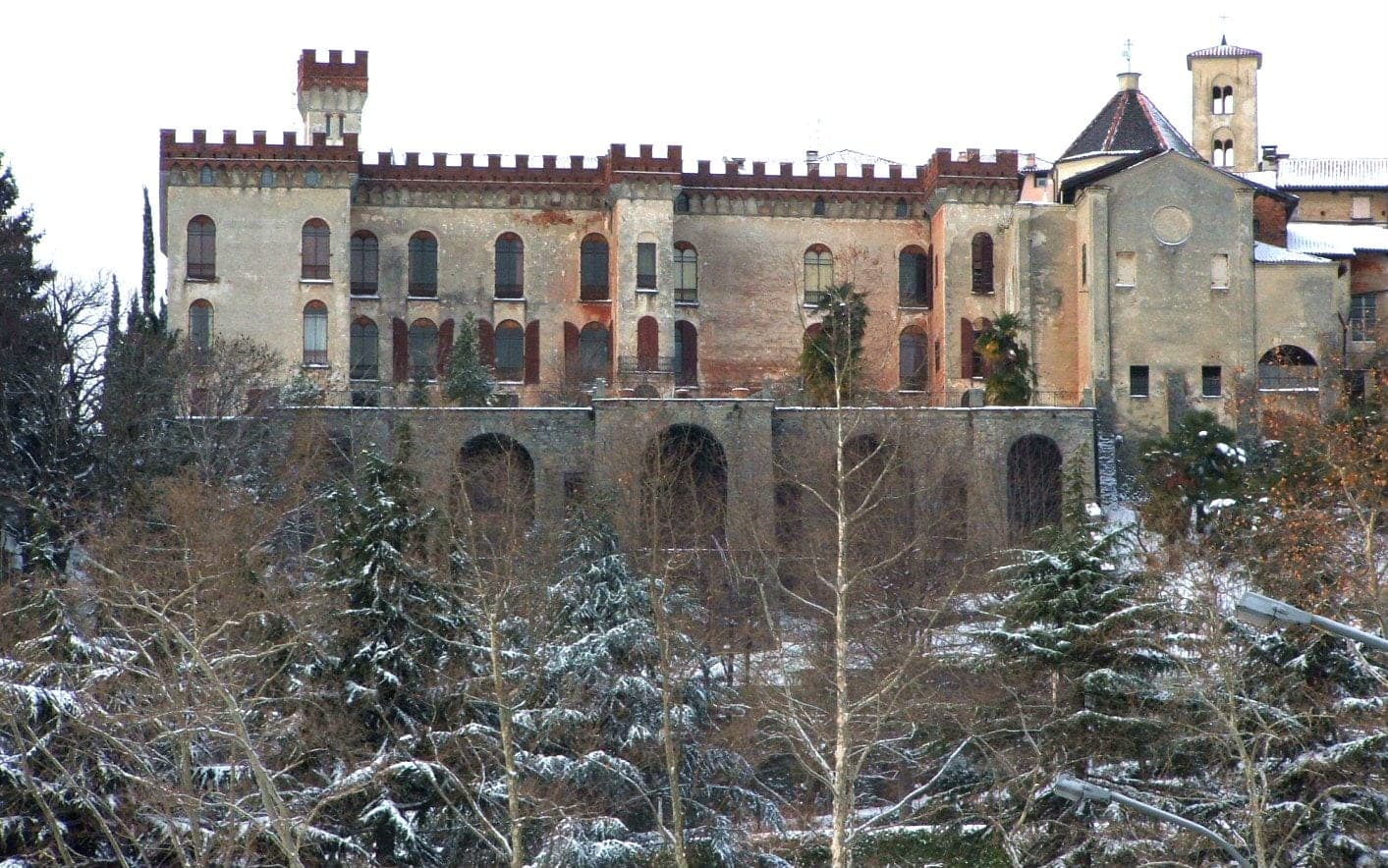
Around the square stand the palaces of the families who made Biella. Palazzo La Marmora is now a house museum: it keeps rooms, furnishings, paintings and family archives, with a nineteenth-century greenhouse and a Renaissance garden. It has belonged for centuries to the same family, the Ferrero della Marmora. Palazzo Gromo Losa was bought in 2004 by the Fondazione Cassa di Risparmio di Biella, which restored it and turned it into an exhibition venue; its Italian garden is known for its roses.
Chapter 4 of 5
A discreet memory
Behind the scenery of the palaces lies a less visible history. In vicolo del Bellone stood the Jewish ghetto, established in 1723, and a synagogue still exists today, on the upper floor of a medieval house and almost invisible from outside; it can be visited only on special occasions. Here the shape of the houses speaks of belonging and exclusion together. It is a part of the Piazzo's history that deserves attention and respect.
Chapter 5 of 5
From above, and how to get up
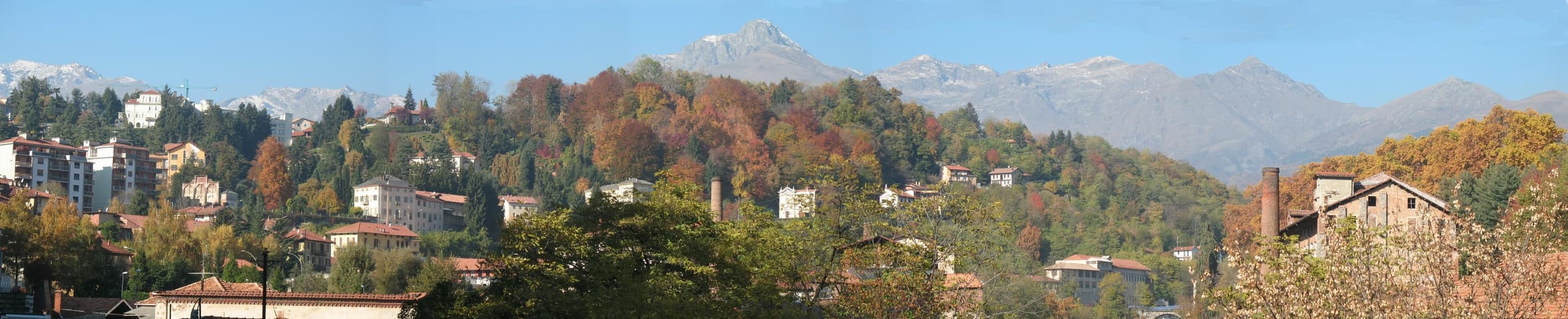
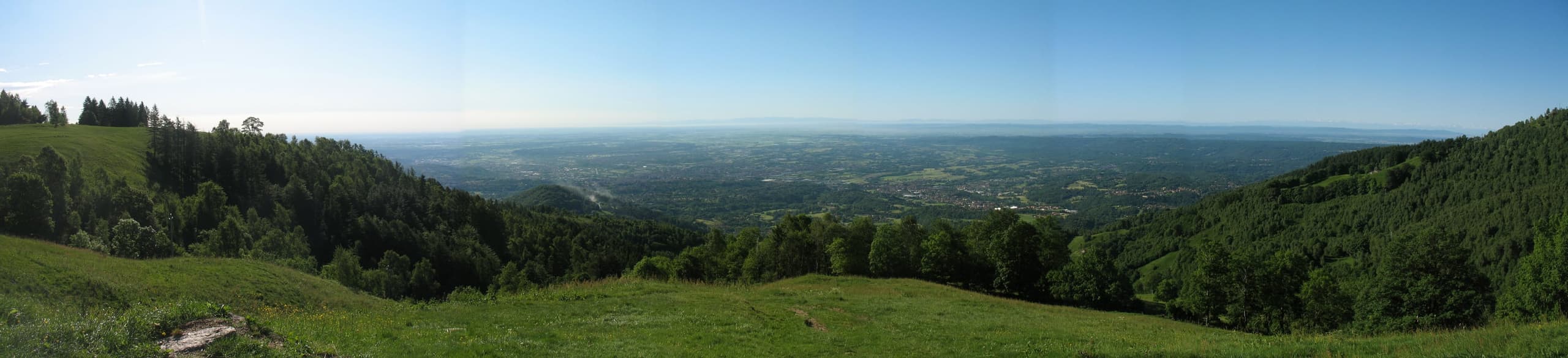
San Giacomo was consecrated in 1227; in piazzetta Cucco stands a rare late medieval half-timbered house, and the view opens over the Elvo and Oropa valleys. To get up there was the funicular of 1885, 177 metres long on a gradient reaching 33.5 per cent, free since 2018. It has been stopped since 1 September 2025: a replacement bus service runs, and in early October 2026 the Comune commissioned a technical study to decide how to restore the link, but there is no reopening date. Since 11 April 2026, with the official ceremony, the Piazzo has been among the Borghi più belli d'Italia, as a guest village.
The market
The market in figures
| Where | Sales | Change | Average value |
|---|---|---|---|
| Biella, tutto il comune (non solo il quartiere) | 837 | +3.3% | 805 €/m² |
Sources
The homes
No homes available here
We have no properties published in this area at the moment.
See all homes