All areasBiella · the basin
Oropa
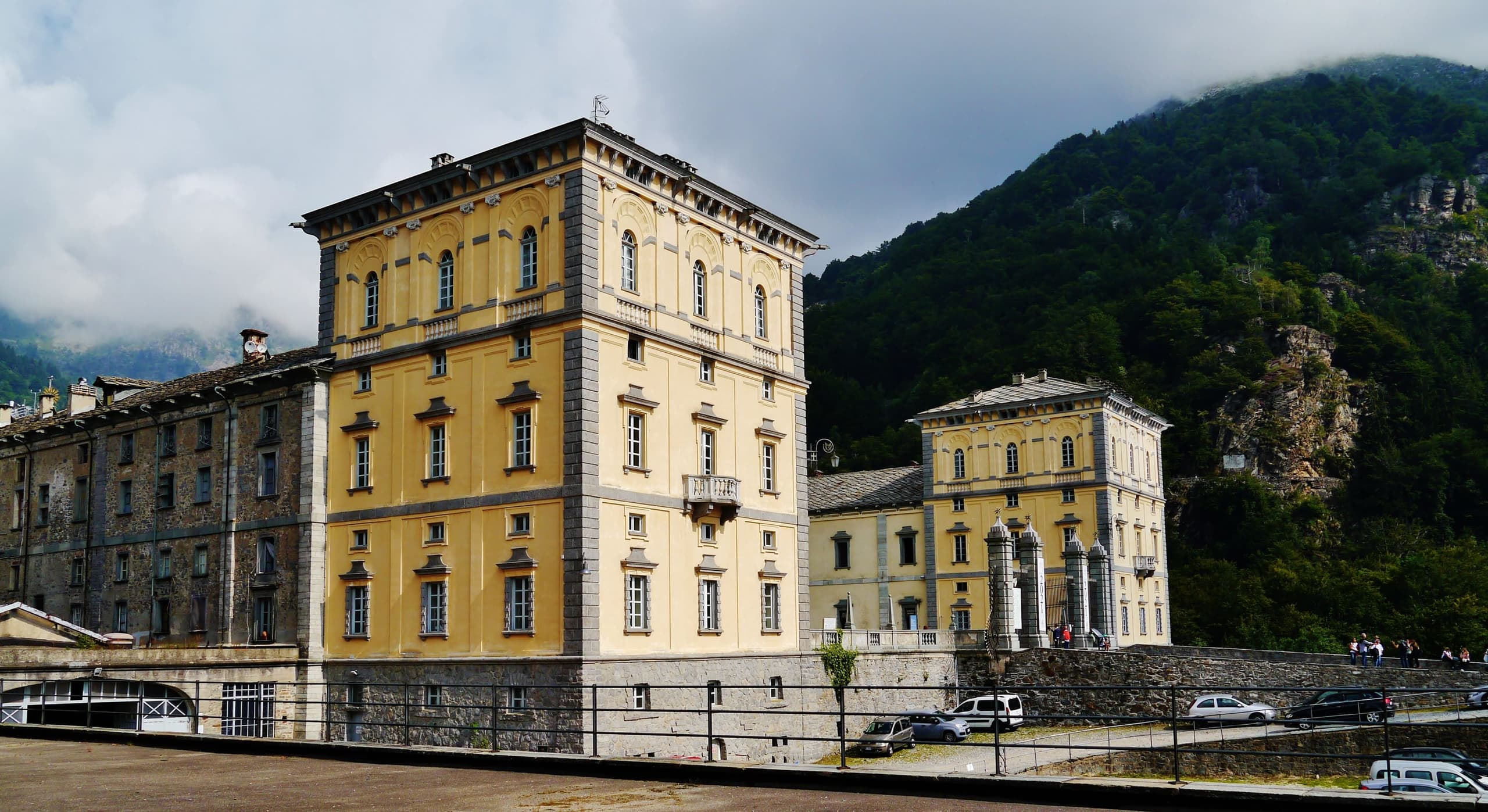
The sanctuary of the Black Madonna, among the mountains but within the municipality of Biella.
The sanctuary buildings, below the mountainside. · Photo: Zairon · CC BY-SA 4.0 · Wikimedia Commons


Chapter 1 of 3
The Black Madonna
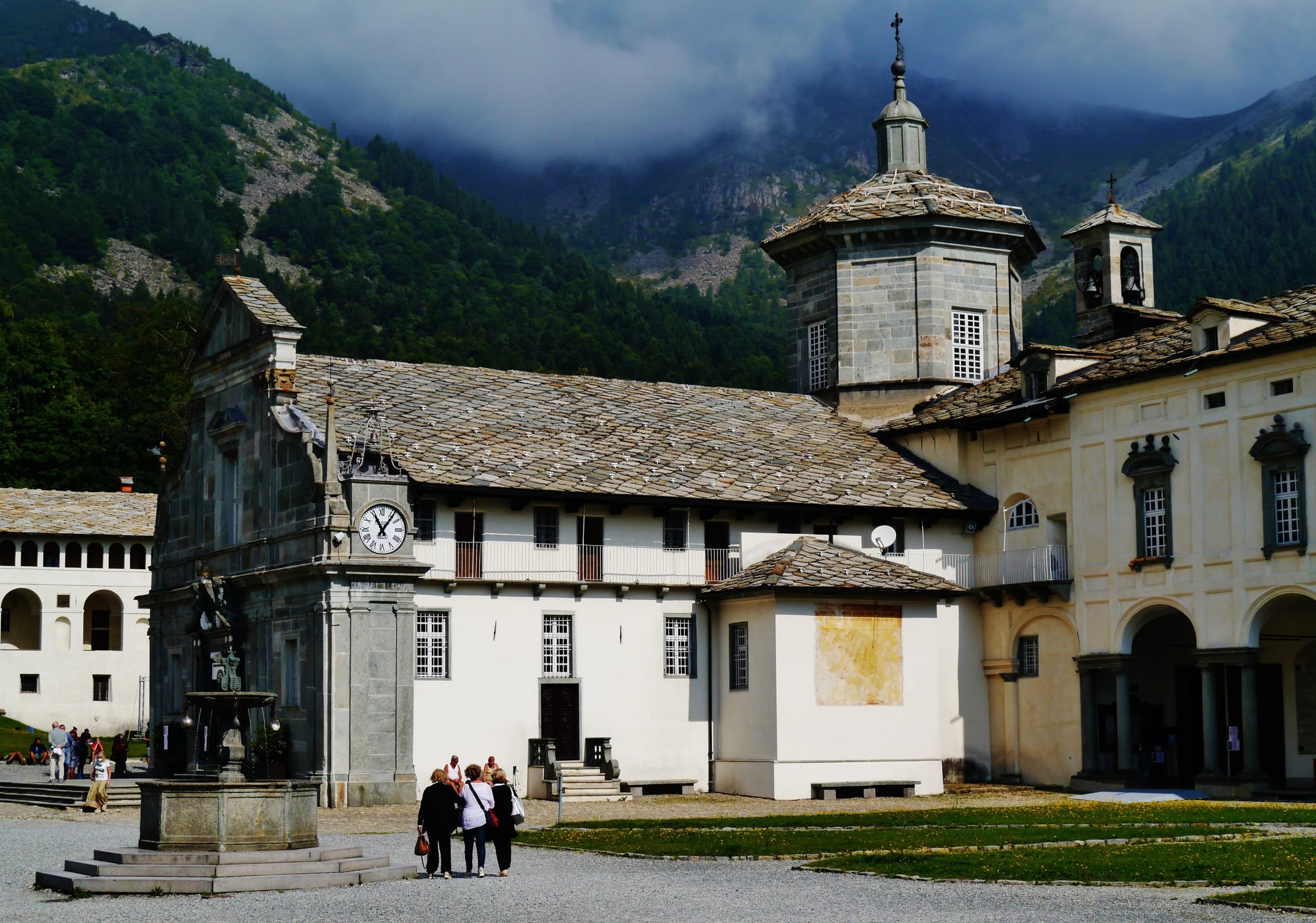
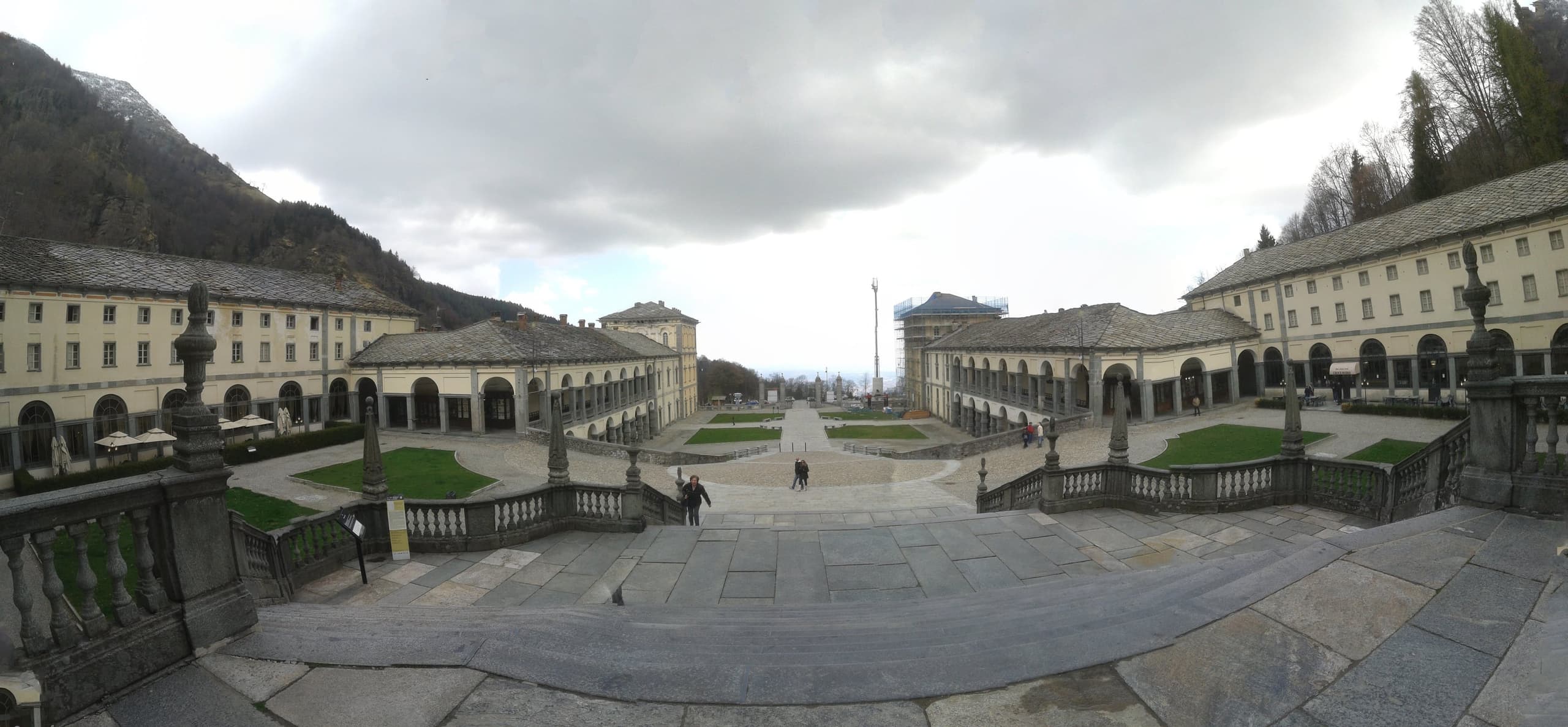
Tradition says Oropa was founded by Saint Eusebius in the fourth century; the first written evidence dates from the early thirteenth century, and the church of Santa Maria was consecrated in the summer of 1294. At the centre of it all is the Black Madonna, a Gothic statue by an anonymous sculptor from the Aosta Valley, from the late thirteenth or early fourteenth century: crowned for the first time in 1620, then every hundred years. The complex bears the names of Juvarra, Galletti and Guarini; the Upper Basilica, begun in 1885, was consecrated in 1960.
Chapter 2 of 3
Lives inside the images
Part of Oropa's memory is on a far smaller scale than its courtyards: that of the votive panels. In the paintings offered to the sanctuary, private people and events appear, told through the faith of those who lived them. Rooms, beds, clothes and work tools become clues to everyday life: the act of giving thus also keeps a trace of the homes and habits of other times.
Chapter 3 of 3
The chapels of the Sacro Monte
Above the sanctuary rise the chapels of the Sacro Monte. The twelve of the Marian cycle, built from 1617, tell the life of Mary with statues and frescoes; other chapels of the same Sacro Monte are found in the sanctuary area. Since 2003 the Sacro Monte has been part of the UNESCO heritage of the Sacri Monti of Piedmont and Lombardy, and since 2005 the basin has been a special nature reserve. From 1911 to 1958 you could reach it from Biella by tram; today, by bus.
Sources
The homes
No homes available here
We have no properties published in this area at the moment.
See all homes