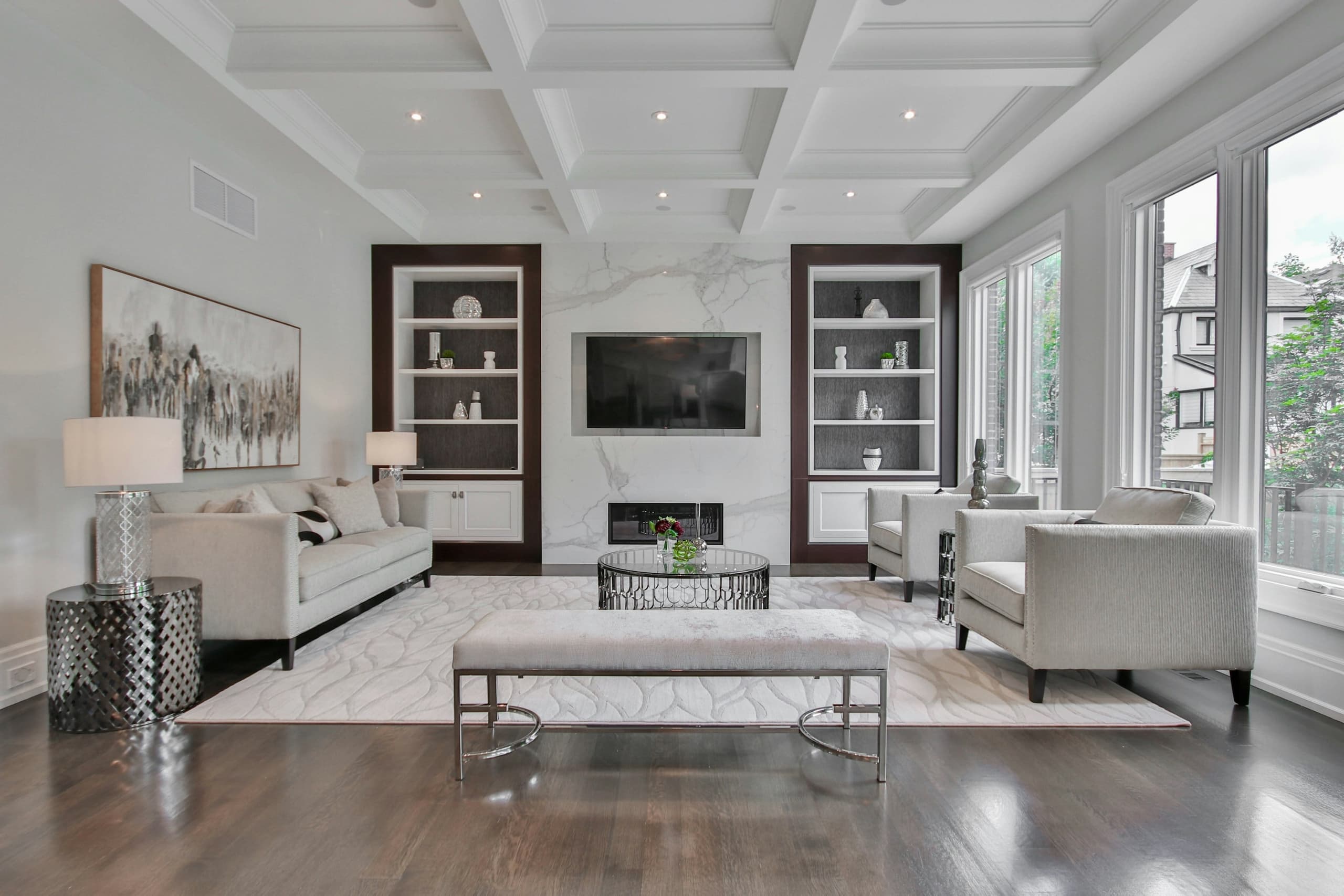
Before viewing a home, people look at the photos. They look for the light in the living room, try to work out where a door leads, how the rooms fit together. The photographs are their first attempt to find their way around a space they do not yet know.
One thing should be said straight away: photos do not sell the home. They are there so that nobody wastes time. A beautiful photo that the viewing contradicts loses trust, and with it the negotiation. The home must be recognisable when people arrive at the door.
Wide views first
A detail can catch the eye, but it is the wide views that convey the character of the spaces: how you enter the living room, where the windows are, how much room is left around the furniture. A shot that makes a room look very different from reality creates an expectation that the viewing will disappoint.
An order you can follow on foot
A gallery works when it follows a route: entrance, living area, kitchen, bedrooms, bathrooms, any outdoor space. The order need not be rigid, but whoever is looking must understand where they are and how the rooms belong to the same home.
Lots of nearly identical photos add little. Better a selection that answers what is missing: a link between two rooms, a view, a cellar or a parking space, the secondary room that matters for everyday living.
Tidy up, don’t hide
Tidying up, clearing surfaces and removing very personal objects helps people read the rooms. Hiding a condition that visitors will need to know about is something else: damp, a ceiling that needs redoing, a window facing a wall. The viewing will show it anyway, and it is better that you said it first.
Photos, floor plan and description do three different jobs
A photograph shows a room; the floor plan lets people work out how the rooms connect; the description adds what cannot be seen, such as the heating, the running costs or the orientation. A good listing holds them together. A caption helps too, when it tells a balcony from a terrace or says where an outside shot was taken from.
What is illustration should be said
A rendering or virtual furniture can show a possibility, for example how furniture would sit in an empty living room. But it must be recognisable as an illustration, with a line saying what it shows. The same goes for mood or stock images: they must be kept distinct from the photos of the real home.
Then comes the viewing
A good gallery does not tell everything about a home. The viewing remains the moment when you feel the spaces, ask questions and decide what to look into further. The photos only need to prepare for it.
If you would like to work out how to present your home, drop by the studio in Cossato or write to us: we look at the rooms together and at the materials needed to show it as it is.